
How to Tidy Up Fast: Book Sorting Mechanics & Visual Recognition
With 2,990 archaic tomes scattered across your grand floor, searching aimlessly is the quickest path to wrist fatigue. This guide breaks down the 4 visual clues to match book sets instantly and the floor clustering tactics that speed up shelf completion.
Never carry books one-by-one across the room. Group 10 matching books into floor stacks near their target aisle first, then shelf the entire set in one rapid burst to trigger instant coin payouts.

4 Visual Clues to Match Tomes Instantly
Instead of reading every individual title, train your eyes on these physical design traits to spot sets in seconds.
1. Spine Foil & Ribs
Books of the exact same 10-book shelf set share identical golden spine ribs and horizontal bands. Scan the pile for repeating gold patterns before clicking.
2. Leather Pigment
Tomes in adjacent eras have subtle dye differences: antique crimson, deep forest moss, navy leather, and ochre parchment. Keep high-contrast covers together.
3. Tome Thickness
Some eras feature thick monolithic encyclopedia volumes, while others are slender poem folios. Books that belong together always have the same spine depth.
4. Chronological Decades
Books are sequenced in 10-year intervals (e.g. 1000 BC to 991 BC). A shelf requires all 10 consecutive years to achieve completion and award bonus gold.
Floor Management & The 4-Stack Method
How to prevent your grand hall from turning into an impassable sea of loose books.
Why Random Piling Hurts Efficiency
When you scatter books haphazardly across the central floor, both you and your automated helper bots suffer. Bots lose precious seconds navigating collision barriers, and you will spend extra time panning back and forth searching for the last elusive tome of a decade.
Always leave a wide walking strip open between the main central pile and the outer wooden bookcases. Never drop unorganized books directly in front of active shelf ladders.
The 4-Stack Staging Protocol
- Designate 4 Floor Zones: Pick 4 open spots on the carpet corresponding to North, South, East, and West shelving sections.
- Batch Sort by Era Group: Throw 1000s BC to the left staging zone, 900s BC to the center, and 800s BC to the right.
- Assemble the 10-Stack: Once you see 8 or 9 books of a specific decade gathered in one staging zone, quickly locate the missing 1–2 books using Spacebar quick-grab.
- The Rapid Shelving Run: Carry 2 or 3 books at a time (utilizing your Backpack upgrade) and slot all 10 onto the shelf in seconds.
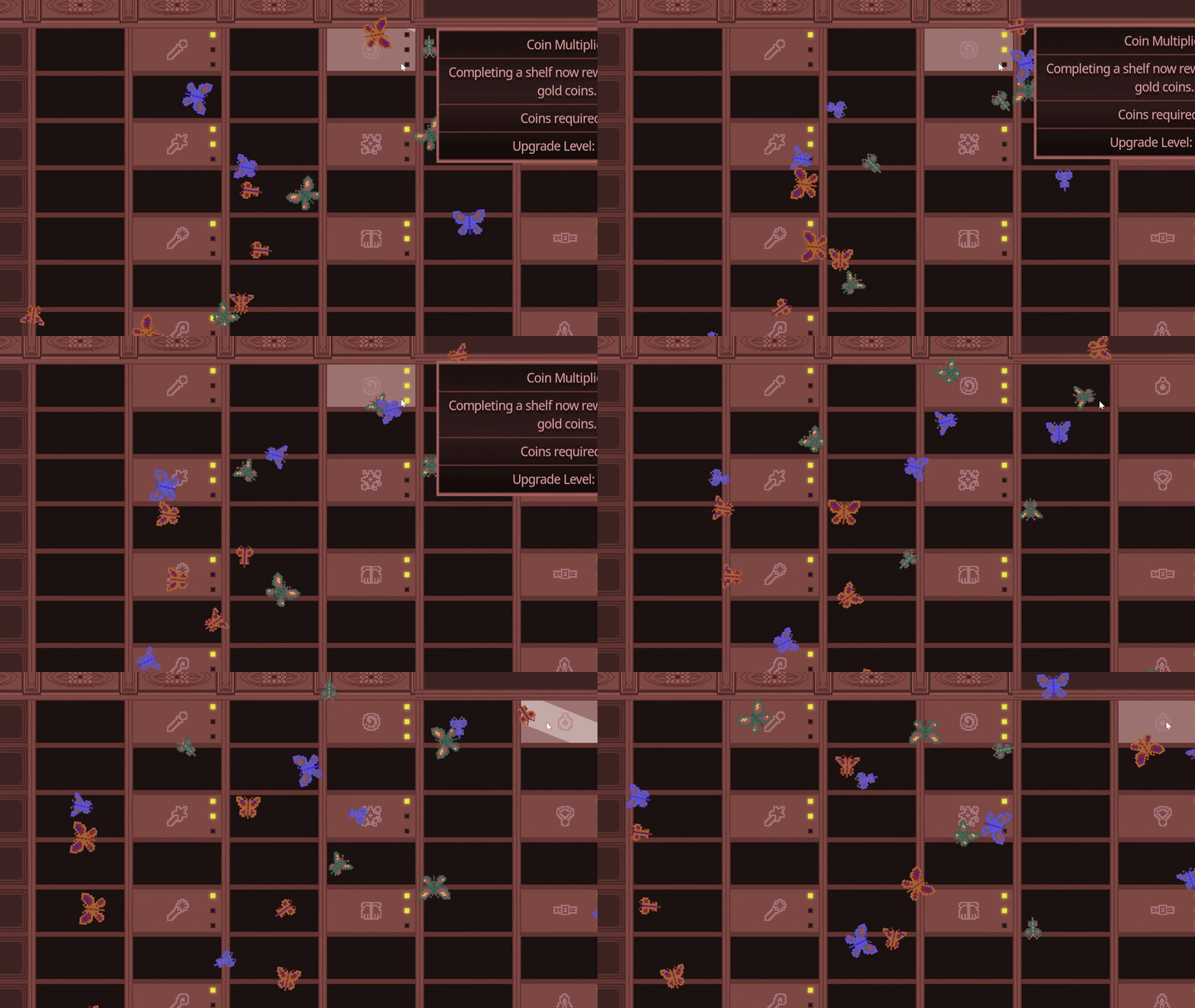
The 10-Book Shelf Snap & Coin Burst
When the tenth book of an era is placed correctly onto its shelf, the game produces a distinctive chime and a burst of gold coins.
- Shelf Lock: Completed shelves become permanently locked, preventing accidental removal.
- Streak Multipliers: Completing multiple shelves in rapid succession triggers streak bonuses if you have unlocked consecutive triggers.
- Immediate Reinvestment: Don't let your gold sit idle; use it to increase Coin Multipliers before starting the next century of books.
Common Mistakes to Avoid
❌ The "Long Haul" Single Delivery
Grabbing 1 book and walking all the way across the hall to place it wastes 70% of your play time. Always stage books into clusters first.
❌ Forgetting to Upgrade Backpack
The Backpack capacity upgrade doubles your manual carry speed immediately. Buy Level 1 as early as shelf 3.
❌ Dropping Books Behind Columns
Tomes dropped too close to room columns can clip into blind spots. If you suspect a book is missing, check our forced reload rescue guide.
Continue Your Archival Journey
Upgrades Tier List: Best Bots & Spells
Discover why Dragonfly Bot and Coin Multipliers dominate S-Tier, and the optimal investment sequence for the first 50 shelves.
Troubleshooting, Missing Books & Save Rescue
Safe exit habits, 60-second IndexedDB auto-save mechanics, and how to force-respawn missing or clipped books.